
Effective IT support in property management does far more than fix broken printers or reset passwords. It is the operational backbone that keeps rent payments processing at midnight, maintenance requests routing to the right technician, tenant data secured against breaches, and compliance documentation audit-ready at any moment. Property management firms run on continuous activity across distributed teams, multiple properties, and a growing stack of software platforms. Without structured IT support, that complexity compounds into fragmented systems, security gaps, and costly downtime. The core functions IT delivers across a property portfolio include:
- Operational continuity through 24/7 monitoring and rapid incident response
- Data security via multi-factor authentication, automated patching, and encrypted cloud storage
- Tenant communication supported by AI-driven chatbots and integrated messaging platforms
- Regulatory compliance through IT audits, access controls, and documented data handling
- Software integration connecting property management platforms, accounting systems, and Microsoft 365 environments
- Disaster recovery using cloud backup solutions like Microsoft Azure to protect sensitive records
How IT support drives property management operational efficiency
Operational efficiency in property management lives or dies on how well your technology infrastructure handles daily workflows without interruption. A structured IT environment standardizes devices, access credentials, and software configurations across every property location, so leasing staff can move between sites without adjusting to different setups or hunting for login credentials.
Automation is where IT support delivers its most measurable impact. Accounting and auditing automation frees staff from time-consuming manual tasks like bill entry, utility analysis, and financial diagnostics, all of which are prime candidates for automation—80% of property management professionals want accounting report creation automated, and 75% want auditing, financial diagnostics, and billing handled the same way. When routine processes run automatically, your team redirects attention to tenant relations and portfolio growth rather than spreadsheet maintenance.
Centralized credential management is another area where IT support pays dividends quickly. When an employee leaves, a properly structured IT system removes access immediately across all platforms. When a new hire starts, role-based permissions are provisioned without guesswork. This kind of centralized access control eliminates the security gaps that accumulate in high-turnover environments and removes the friction that slows onboarding.
IT support also enables faster maintenance request resolution by connecting field technicians to the same Microsoft 365 environment as office staff. Everyone accesses real-time data, work orders route correctly, and nothing falls through the cracks because someone was working from a different system.
- Automated billing and accounting workflows reduce manual data entry across the portfolio
- Standardized device configurations let staff operate consistently across multiple property locations
- Role-based access provisioning speeds up onboarding and tightens offboarding security
- Integrated communication tools create trackable records for every tenant interaction
- Mobile device management secures field staff access without creating network vulnerabilities
Pro Tip: Standardize your IT environment before adding new properties. Bringing each new location online with the same device policies, software stack, and access framework prevents the technical debt that accumulates when every site runs differently.
How IT support protects tenant data and keeps you compliant

Cybersecurity in property management carries real legal weight. Firms handling tenant personal and financial data fall under state-level privacy regulations, including the California Consumer Privacy Act, and must also navigate fair housing compliance requirements that touch how data is collected, stored, and accessed. IT support provides the technical controls that make compliance achievable rather than aspirational.
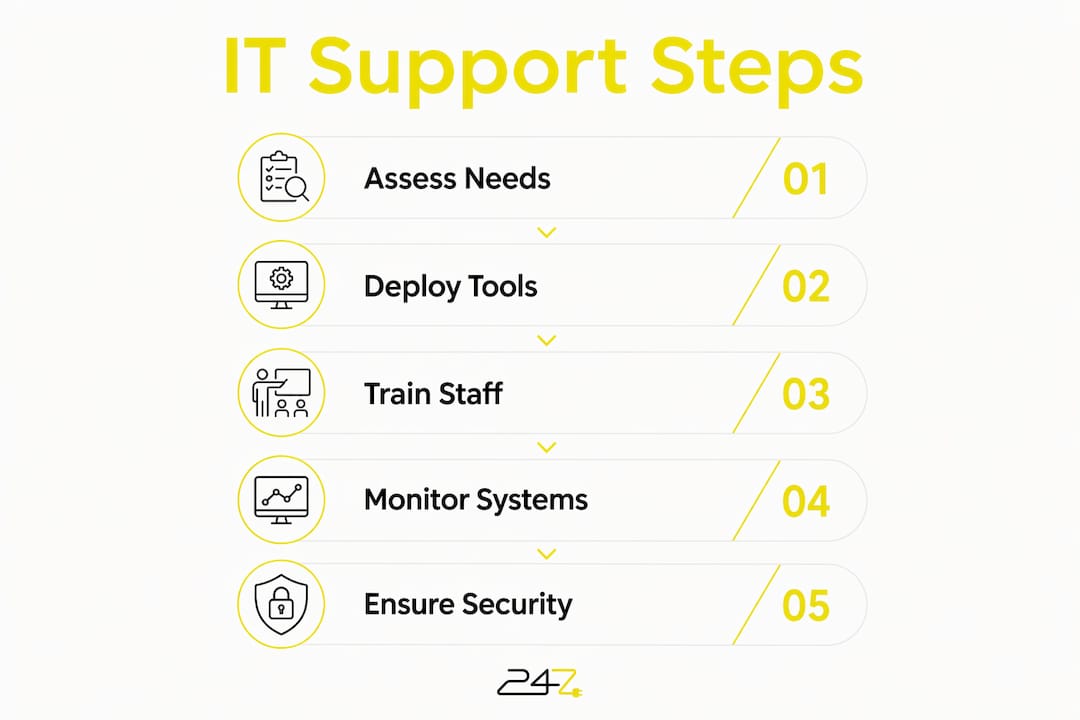
The audit function alone changes how firms approach compliance. IT maturity audits assess your current security posture against recognized cybersecurity standards, identify gaps before regulators or attackers find them, and produce the documentation that ownership groups and management partners need for due diligence. Automated patching closes vulnerabilities on a schedule rather than waiting for someone to remember.
Cloud backup and disaster recovery strategies protect against both cyberattacks and hardware failures. Centralized, secure cloud storage with automated backups gives you a single searchable location for all financial records, lease agreements, and tenant data, with audit-ready access logs attached. When an outage hits, recovery is measured in minutes rather than days.
- Multi-factor authentication restricts system access to verified users only
- Automated patch management closes known vulnerabilities before they are exploited
- Access controls tied to job roles limit data exposure when staff changes occur
- Encrypted cloud storage protects tenant records from unauthorized access
- Documented IT audit trails satisfy regulatory review requirements
Cloud platforms and AI tools reshaping property management IT
Cloud computing and AI are not future considerations for property management. They are active infrastructure decisions that affect how your team operates today. Microsoft Azure provides centralized, accessible data storage that supports remote work, consolidates systems across properties, and enables secure collaboration without tying your data to a physical location. When a leasing agent needs a lease agreement from a showing, or a regional manager needs financial data from a different city, Azure-backed storage makes that access immediate and secure.

AI-driven chatbots have become a concrete operational tool for leasing teams. Responding to tenant inquiries within 1–2 minutes yields a 40% chance of prospect engagement, according to Zillow research cited by the National Apartment Association. Waiting 30 minutes drops that likelihood to 10%. AI leasing assistants work around the clock, handling initial inquiries, qualifying prospects, and feeding data directly into your property management software without requiring a staff member to be available at 11 PM.
Beyond leasing, AI applies pattern recognition to accounting discrepancies, utility bill spikes, and lease parsing to compile income statements automatically. These are exactly the tasks that property management professionals most want automated. The AI automation benefits extend to integrated reporting that tracks leasing performance with accurate data, giving leadership reliable occupancy and operational insights without manual compilation.
- Microsoft Azure centralizes data storage and enables secure access across distributed property teams
- AI chatbots provide 24/7 tenant responses, improving engagement and leasing conversion rates
- Integrated cloud communication tools sync with property management software for trackable records
- AI-powered utility bill analysis and accounting automation reduce manual financial workload
- Mobile device management secures workforce access while protecting data on lost or stolen devices
Pro Tip: When evaluating AI services for your operations, prioritize tools that integrate directly with your existing property management software. An AI chatbot that operates in isolation creates a separate data silo rather than feeding insights back into your core platform.
What the data says about IT’s impact on property management staff
The property management industry carries a staff turnover rate of 32.7%, compared to a 22% average across all industries. That gap has direct IT implications. Every departure creates an access revocation requirement, an onboarding event for the replacement, and a window of security risk if credential management is not automated. IT support that handles these transitions systematically reduces the operational cost of turnover without requiring manual intervention from management.
The common thread across those preferences is time. These are tasks that consume hours without producing outcomes that require human judgment. When IT support automates them, staff redirect energy toward resident relations, lease renewals, and portfolio growth. The reduction in manual workload also addresses burnout, which is a direct contributor to the turnover rate the industry is trying to reduce.
Fragmented IT ecosystems compound the problem. Firms that have accumulated different software stacks, device configurations, and access systems across properties face high-cost manual workarounds and security vulnerabilities that structured IT would prevent. Selecting IT partners with genuine property management domain expertise matters here. Providers unfamiliar with real estate workflows struggle to support industry-specific platforms during critical periods like month-end reporting, creating downtime exactly when it is most damaging.
Working with 247techify on property management IT
Property management firms that treat IT as a cost center rather than operational infrastructure tend to discover the gap the hard way, during a security incident, a compliance audit, or a month-end system failure. 247techify builds the structured IT foundation that prevents those moments.
247techify’s managed IT services deliver 24/7 monitoring, a response time under 30 minutes, and a cybersecurity-first approach that covers the full range of property management IT requirements: device standardization, access control, automated patching, cloud backup, and compliance documentation. For firms with existing internal IT staff, co-managed IT support extends your team’s capacity without replacing it. 247techify also provides specialized cloud backup and disaster recovery solutions designed to keep tenant data protected and audit-ready. With a 98% client satisfaction rate and deep experience in regulated industries, 247techify gives property management firms the IT foundation their portfolios require.
Key Takeaways
Structured IT support is the operational and security foundation that property management firms need to scale, stay compliant, and reduce the staff burden created by a high industry turnover rate.
| Point | Details |
|---|---|
| 24/7 IT support is non-optional | Property operations run around the clock; IT monitoring and response must match that schedule. |
| Automation reduces staff burden | 80% of property management professionals want accounting report creation automated, and 75% want auditing, financial diagnostics, and billing handled automatically. |
| Turnover demands structured IT | A 32.7% industry turnover rate makes automated onboarding, offboarding, and credential management a security requirement. |
| AI chatbots accelerate leasing | Responding promptly yields a substantially higher prospect engagement rate, while delays sharply reduce it. |
| Cloud backup protects compliance | Centralized, automated cloud storage provides audit-ready records and fast recovery from outages or breaches. |
FAQ
What is the role of IT support in property management?
IT support in property management maintains operational continuity, secures tenant data, automates routine workflows, and keeps software systems integrated across distributed property teams. It covers everything from 24/7 helpdesk response and cloud backup to compliance documentation and AI-driven tenant communication.
How does IT support help property managers handle emergencies and downtime?
24/7 IT monitoring detects network outages, software failures, and security incidents before they escalate, with live helpdesk agents focused on first-call resolution to minimize disruption to rent processing, maintenance workflows, and tenant communication.
What cybersecurity measures does IT support provide for property management firms?
IT support delivers multi-factor authentication, automated security patching, role-based access controls, encrypted cloud storage, and regular IT maturity audits, all of which protect tenant data and satisfy data protection regulations including state-level privacy laws.
How does AI fit into property management IT support?
AI tools automate tenant inquiry responses, accounting report creation, utility bill analysis, and leasing data tracking. According to the National Apartment Association, AI leasing assistants respond 24/7 and feed performance data directly into property management platforms, improving both occupancy rates and staff capacity.
What skills should property managers look for in an IT support partner?
Property managers should prioritize IT partners with direct experience supporting real estate-specific platforms, since providers without that domain knowledge struggle during critical periods like month-end financial reporting and often create conflicts between software vendors and IT infrastructure.