
Continuous threat monitoring is the ongoing, automated process of discovering, validating, and prioritizing exploitable exposures across your attack surface, rather than scanning for vulnerabilities on a quarterly cycle. Gartner frames this as Continuous Threat Exposure Management, or CTEM, a five-phase operating model that keeps security decisions tied to business risk. The immediate move for any IT leader reading this: scope your crown-jewel assets this week and turn on continuous discovery before you touch a prioritization framework.
TL;DR:
- Continuous threat monitoring pulls real-time signals from cloud, identity, endpoints, and application telemetry, focusing on exploitable exposures tied to active attacker techniques.
- Building a program requires scoping with business teams, instrumenting telemetry sources strategically, and establishing validation and ownership processes to ensure real risk reduction.
- Key metrics to track include mean time to detect and remediate, coverage percentage of critical assets, and validated-to-fixed ratios, which better reflect actual security posture than alert counts.
- A managed services model offers a cost-effective alternative for small organizations, providing full cycle coverage without internal staffing of 24/7 security teams.
- Effective CTEM prioritizes validation and mobilization over simply discovering assets, with fixed ownership and SLA enforcement as critical for reducing true business risk.
Table of Contents
- What Does Continuous Threat Monitoring Actually Cover?
- How Does the Five-Phase CTEM Cycle Work?
- How Is CTEM Different From Vulnerability Management or Continuous Monitoring?
- How Do You Build a Continuous Threat Monitoring Program?
- What Metrics Prove Continuous Threat Monitoring Is Working?
- Which Technologies and Integrations Support a CTEM Stack?
- Why a Managed Partner Often Beats Building CTEM In-House
- What Legal and Compliance Rules Apply to Continuous Threat Monitoring?
- How Much Should You Budget for a CTEM Program?
- Our Take on What Actually Moves the Needle
- Get Continuous Threat Monitoring Without Building a SOC From Scratch
- Sources
- FAQ
What Does Continuous Threat Monitoring Actually Cover?
Continuous threat monitoring is not a single tool. It’s an operating discipline that treats exposure discovery as a constant feed rather than a scheduled event, and CTEM is the structured version of that discipline. Where a traditional vulnerability scan runs monthly and produces a static report, continuous threat monitoring pulls signals in real time from identity systems, cloud configurations, endpoints, and code repositories, then routes them through prioritization logic tied to what attackers are actually exploiting.
The scope of a mature program typically spans:
- Cloud infrastructure and misconfigurations across AWS, Azure, and Google Cloud accounts
- Identity and access telemetry, including privilege escalation and credential misuse patterns
- External-facing assets: domains, APIs, exposed ports, and forgotten subdomains
- Endpoint and network telemetry from EDR and XDR platforms
- Runtime application behavior and code repository exposure
Why now? Attack surfaces change daily. A developer spins up a test bucket, a contractor gets temporary admin rights, a SaaS integration opens a new API endpoint. None of that shows up in a scan you ran six weeks ago. CISA’s Known Exploited Vulnerabilities catalog exists precisely because severity scores alone don’t tell you what’s actively being weaponized. Continuous threat monitoring uses that kind of feed as a live prioritization input, not a reference document you check occasionally.
How Does the Five-Phase CTEM Cycle Work?
Gartner’s CTEM model breaks the work into five phases that run continuously, not sequentially. Each phase feeds the next, and the loop never fully closes because your environment never stops changing.
- Scoping. Sit down with business stakeholders, not just IT, to map crown-jewel assets, revenue-critical systems, and regulatory obligations. Success criteria get defined here: what counts as “covered,” what counts as “fixed.”
- Discovery. Build continuous inventory across cloud accounts, identity systems, endpoints, and shadow IT. This phase runs on telemetry, not point-in-time scans. Pull from asset management, cloud service provider APIs, and network discovery tools continuously.
- Prioritization. Combine exploitability data, active-exploitation signals from sources like CISA’s known exploited vulnerabilities list, and business impact scoring. A medium-severity CVE under active exploitation on a crown-jewel server outranks a critical CVE sitting on an isolated dev box.
- Validation. Before you assign a ticket, confirm the exposure is actually reachable and exploitable. Attack-path simulation and targeted testing separate theoretical risk from practical risk. Skipping this phase is why so many programs drown in false urgency.
- Mobilization. Assign a named owner, set a remediation SLA, automate the ticket into the right queue, and apply compensating controls if a full fix takes time. Close the loop by verifying the fix actually removed the attack path.
Pro Tip: Validation is the phase most teams skip under deadline pressure, and it’s the one that determines whether your program reduces real risk or just generates more tickets nobody trusts.
How Is CTEM Different From Vulnerability Management or Continuous Monitoring?
These terms get used interchangeably, and that confusion causes real budget misallocation.
- Vulnerability management patches based on CVSS severity scores. It answers “how bad is this flaw in theory?” CTEM answers “is this flaw actually exploitable in my environment, and does it matter to the business?”
- Continuous monitoring (in the SIEM/log-analysis sense) detects and alerts on activity. It tells you something happened. CTEM adds the validation and prioritization layer on top, deciding what deserves action and in what order.
- SIEM, EDR, and XDR are telemetry sources that feed CTEM. They generate the raw signal; CTEM orchestrates what that signal means for exposure and remediation priority.
You don’t replace vulnerability management with CTEM. You keep VM running for baseline patch hygiene and layer CTEM on top to handle exploitability, business context, and validation. Organizations that rip out VM entirely usually end up blind to routine patching debt that CTEM’s business-risk lens wasn’t designed to catch.
How Do You Build a Continuous Threat Monitoring Program?
Most programs fail not from lack of tooling but from skipping the groundwork. Here’s the sequence that actually works in practice.
- Run scoping workshops with business owners first. IT alone can’t identify which systems generate revenue or carry regulatory weight. Get finance, operations, and compliance in the room before you buy anything.
- Instrument telemetry in priority order. Identity logs and cloud inventory come first, since privilege abuse and cloud misconfiguration drive a disproportionate share of breaches. Endpoint telemetry follows.
- Write prioritization rules that pull in active-exploitation data. Wire CISA’s known exploited vulnerabilities feed directly into your ticketing logic so exploited-in-the-wild flaws jump the queue automatically.
- Build a lightweight validation playbook. You don’t need a full red team exercise for every finding. A targeted attack-path check, run consistently, catches most false positives before they reach an engineer’s desk.
- Set mobilization SLAs and automate the handoff. Every validated exposure needs a named owner and a deadline. Ticket automation into existing ITSM workflows prevents findings from dying in a spreadsheet.
- Decide your staffing model honestly. Building a 24/7 internal SOC requires round-the-clock analyst coverage, which most mid-sized organizations can’t justify financially. A managed SOC, MDR provider, or MSP partner fills that gap without the headcount.
Pro Tip: If your remediation ownership map has more “unassigned” rows than named owners, you don’t have a CTEM program yet. You have a very well-organized backlog.
Ownership discipline is the part most guides gloss over. Every validated exposure needs a named owner, a remediation SLA, and a verification step confirming the fix actually closed the attack path. Skip that last step and you’ll keep “fixing” the same exposure every quarter.

What Metrics Prove Continuous Threat Monitoring Is Working?
Executives don’t care how many alerts your team triaged. They care whether exposure to real business risk is shrinking. Four metrics do that job:
- MTTD (mean time to detect): how long between an exploitable exposure appearing and your program finding it.
- MTTR (mean time to remediate): how long between validation and confirmed fix, measured only on findings that passed validation, not raw alert counts.
- Coverage percentage: the share of your critical attack surface actually under continuous monitoring versus assumed-but-unverified.
- Validated-to-fixed ratio: of everything validated as exploitable, what fraction actually got remediated within SLA.
A useful reframe: a low alert count doesn’t mean you’re secure. It might mean your discovery coverage has gaps. Track coverage percentage alongside MTTD and MTTR, or you’ll optimize for a number that doesn’t reflect real exposure.
Report these quarterly to leadership using the actual numbers, not maturity scores or color-coded dashboards. A CFO understands “MTTR dropped from 21 days to 9 days on crown-jewel systems” far better than a risk heat map.
Which Technologies and Integrations Support a CTEM Stack?
The stack breaks into three functional layers, and the mistake most teams make is buying validation or orchestration tools before telemetry coverage is solid.
Telemetry sources feed raw visibility: EDR and XDR platforms for endpoint and network signal, identity provider logs for access anomalies, cloud security posture management (CSPM) and attack surface management (ASM) tools for cloud and external-facing inventory, and runtime or application performance telemetry for post-deployment behavior. Elastic’s continuous monitoring approach illustrates this well, correlating logs, metrics, and APM traces so discovery isn’t siloed by data type.
Validation tools confirm exploitability: attack-path testing platforms, automated penetration tools, and runtime simulation. This is where you separate theoretical CVEs from paths an attacker could actually walk. PreEmptive’s work on application-layer continuous monitoring emphasizes pairing runtime telemetry with automated response so post-deployment weaknesses get caught in production, not just in pre-release testing.
Orchestration layers close the loop: SOAR platforms, ITSM ticketing integration, and automated patching or compensating-control deployment. Real-time threat intelligence feeding directly into enforcement, the way Cloudflare integrates threat intel into WAF rules, shows what “continuous” should mean: detection and mitigation happening in the same motion, not two separate workflows days apart.
When evaluating vendors, prioritize real-time telemetry ingestion, validated exploitability scoring (not just CVSS pass-through), workflow automation into your existing ticketing system, and open integration APIs. A tool that can’t talk to your existing stack just adds another dashboard nobody checks.
Why a Managed Partner Often Beats Building CTEM In-House
Running the full CTEM cycle internally means staffing scoping workshops, discovery engineering, validation testing, and 24/7 mobilization response, which is a lot of specialized headcount for most mid-sized organizations to justify. This is where a cybersecurity-first managed IT partner changes the math: instead of hiring five specialized roles, you contract outcomes across the same five phases.
A cybersecurity-first managed IT partner’s model can map directly onto the CTEM lifecycle. Scoping and discovery may be accelerated through 24/7 monitoring infrastructure already in place. Mobilization might benefit from a rapid response commitment, which matters most in the validation-to-remediation window where delay turns a contained exposure into an incident. For organizations in healthcare and finance, compliance expertise around HIPAA and PCI-DSS can mean prioritization rules account for regulatory exposure, not just technical severity.
| CTEM phase | What a managed partner accelerates |
|---|---|
| Scoping | Faster asset inventory using existing monitoring footprint |
| Discovery | Continuous coverage without new internal hires |
| Validation | Established response protocols reduce false-urgency noise |
| Mobilization | Response commitment, documented SLAs |
Contracting a managed CTEM function should come with clear reporting cadence, defined success milestones, and named escalation paths, the same accountability structure you would demand from an internal team. A 98% client satisfaction rate reflects the operational discipline behind that structure, though it’s worth confirming reporting terms directly with any provider before signing.
What Legal and Compliance Rules Apply to Continuous Threat Monitoring?
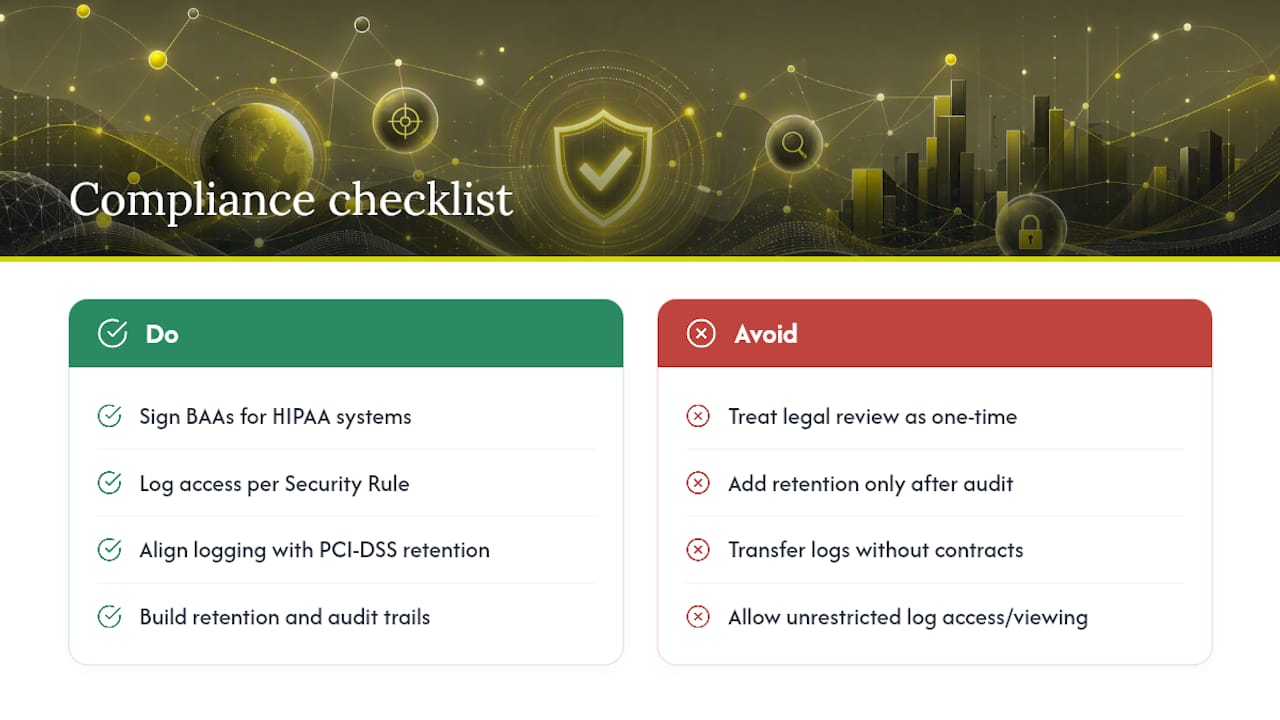
Continuous monitoring touches regulated data the moment it ingests identity logs, network traffic, or endpoint telemetry from systems handling protected information. In healthcare environments, HIPAA requires that monitoring tools and any managed provider accessing protected health information operate under a signed Business Associate Agreement, with audit logging that satisfies the Security Rule’s requirements for access tracking. Financial services organizations handling cardholder data need monitoring architecture that aligns with PCI-DSS logging and retention requirements, which specify how long access records must be kept and who can view them.
Cross-border organizations face an added layer: telemetry that includes personal data may fall under GDPR or comparable Canadian privacy frameworks like PIPEDA, depending on where the data subject resides and where it’s processed. Continuous monitoring platforms that route logs through cloud infrastructure in another jurisdiction need contractual data-processing terms that account for that transfer.
Retention policy matters just as much as collection scope. Regulators increasingly expect organizations to show not just that they monitor continuously, but that they can produce an audit trail proving when an exposure was discovered, validated, and remediated. That mobilization-phase verification step isn’t just good practice; in regulated industries, it’s often the evidence an auditor will ask for directly. Build retention and audit logging into your CTEM design from the start, not as an afterthought once a regulator asks for records you didn’t keep.
Any organization operating in a regulated sector should treat legal review of monitoring contracts and data-handling terms as a standing item, not a one-time signature.
How Much Should You Budget for a CTEM Program?
Costs break into three buckets: telemetry tooling, validation capability, and staffing, and staffing is almost always the largest line item once you factor in around-the-clock coverage.
Telemetry tooling (EDR/XDR licensing, ASM platforms, identity monitoring) scales with endpoint and cloud asset count, so budgeting should follow actual environment size rather than a flat per-seat estimate pulled from a vendor’s marketing page. Validation capability, whether that’s attack-path simulation software or periodic professional testing, tends to be a smaller recurring cost but spikes if you outsource testing engagements rather than automate them.
Staffing is where budgets get tested. A 24/7 internal SOC requires enough analysts to cover shifts, holidays, and turnover, realistically a minimum of several full-time hires once you account for coverage gaps. That’s before factoring in the specialized skill sets validation and mobilization phases require. For most small and mid-sized organizations, that math simply doesn’t work, which is why managed SOC, MDR, or MSP arrangements exist as a fixed-cost alternative to variable internal headcount.
Budget conversations should also account for the cost of not monitoring continuously: incident response, breach notification obligations, and downtime from an exposure that sat unvalidated for weeks. A program that looks expensive against last year’s periodic-scan budget usually looks cheap against a single unremediated exposure that turns into an actual incident. Frame the budget request in terms of exposure window reduction, not tooling line items, and it lands differently with finance leadership.
Our Take on What Actually Moves the Needle
The conventional CTEM pitch oversells discovery and undersells mobilization. Vendors love demoing dashboards full of newly found assets and vulnerabilities, because that’s the visually impressive part. But a program that finds ten thousand exposures and validates none of them is worse than a smaller program that validates everything it finds, because it trains your team to ignore its own alerts.
Where the standard advice falls short: it treats the five CTEM phases as equally weighted. They aren’t. Validation and mobilization are where risk actually gets reduced. Scoping and discovery just tell you where to look. If you’re building a program with a limited budget, spend disproportionately on validation tooling and remediation ownership discipline before you spend on more telemetry sources.
What should you prioritize first? Named ownership for every exposure, tracked against an SLA, verified on closure. That single discipline, more than any tool purchase, determines whether continuous threat monitoring reduces your actual risk or just generates a better-organized version of the same unresolved backlog.
— 247techify Team
Get Continuous Threat Monitoring Without Building a SOC From Scratch
Building the full CTEM lifecycle internally means hiring for scoping, discovery engineering, validation testing, and 24/7 mobilization response, a staffing commitment most small and mid-sized organizations can’t justify against a single budget line. This gap can be closed with a cybersecurity-first managed IT model built for exactly this problem: continuous monitoring, rapid response times, and compliance expertise for regulated industries like healthcare and finance, without the cost of five specialized hires.
For organizations weighing co-managed arrangements that keep some internal security staff while outsourcing SOC capacity, 247techify’s co-managed IT services fill that middle ground. For organizations that need the full lifecycle handled end to end, the managed IT services plan covers scoping through mobilization under one contract. Reach out for a scoping conversation and get a straight answer on what continuous coverage would look like for your environment.
Sources
- CISA known exploited vulnerabilities
- Continuous threat monitoring for application security — PreEmptive
FAQ
What Is CTEM and How Does It Work?
CTEM, or Continuous Threat Exposure Management, is a five-phase cycle (scoping, discovery, prioritization, validation, mobilization) that continuously finds, validates, and drives remediation of exploitable exposures based on business risk rather than static severity scores.
What Is the Difference Between SIEM and CTEM?
A SIEM aggregates and correlates security logs to detect and alert on activity; CTEM is a broader lifecycle that takes that telemetry, along with cloud and identity data, and adds validation and business-context prioritization to decide what actually needs fixing first.
What Are Examples of Continuous Monitoring in Practice?
Examples include cloud security posture management flagging misconfigurations in real time, EDR platforms tracking endpoint behavior continuously, external attack surface management scanning for exposed assets, and runtime application monitoring detecting post-deployment threats, an approach PreEmptive’s continuous monitoring model applies directly to application security.
What Are the Five Stages of CTEM?
The five stages are scoping (defining critical assets), discovery (continuous asset and vulnerability inventory), prioritization (ranking exposures by exploitability and business impact), validation (confirming exposures are actually reachable and exploitable), and mobilization (assigning owners and remediating with verification).
Can a Small Business Realistically Run Continuous Threat Monitoring?
Yes, though most small businesses lack the headcount for an internal 24/7 SOC, which makes a managed IT partner offering continuous threat monitoring, like 247techify’s managed services, a practical way to get full lifecycle coverage without new hires.